


E-commerce… it’s on a speed run — and businesses? They gotta keep up or get left behind. At SuperCommerce, we’ve been watching (with popcorn) the buzz around two big players: composable commerce and headless architecture.
So, what’s the deal here? Let’s break it down. In this post, we’ll dive into what makes composable commerce versus headless tick. Spoiler alert: it’s all about helping you pick the one that won’t tank your business strategy.
What Is Composable Commerce?
So, composable commerce is the new hotshot in the e-commerce world – it lets businesses whip up their own custom-made online stores by piecing together various components. Flexibility, customization… you get the picture. It’s like hitting a buffet instead of being stuck with a limited prix fixe menu.
Building Blocks of Composable Commerce
Here’s where composable architecture struts its stuff-like LEGO for your e-commerce. You’ve got your CMS, PIM, OMS, and those magical payment gateways. Each can be swapped or upgraded without causing a meltdown. It’s all about making things work your way.

Imagine this: you’re fed up with your current payment setup. No sweat… you swap it out for something better without nuking your whole store. This kind of flexibility is a game-changer for businesses needing to pivot with market whims or customer cravings.
Business Benefits
Why do businesses fall head over heels for composable commerce? Simple-it lets them move at lightning speed… and innovate without major meltdowns. Want a snazzy new feature? Easy peasy. Got a wild marketing idea? Roll with it. Its modular nature allows for experimentation without putting your entire online life on the line.
Developer Advantages
Let’s not forget the dev crew-composable commerce treats them like royalty. They get to pick the tools they love best, rather than being shackled to some do-it-all solution. This means more efficient development workflows and a bunch of satisfied tech wizards.
Real-World Impact
Now, let’s talk brass… uh, numbers. Remember Rapha’s epic productivity surge with Netlify? A whopping 100x leap in developer efficiency when they jumped on the composable bandwagon. Not a little improvement-a colossal stride forward.
Moreover, Statista’s crystal ball reveals that 67% of e-commerce businesses are gearing up to sink cash into composable commerce tech by 2025. Not just a passing fad… it’s shaping up to be a new golden standard.
In sum, composable commerce-it’s more than a buzzword. It’s a down-to-earth strategy helping businesses to remain nimble, sharp, and competitive in the e-commerce rat race. Whether you’re a scrappy startup or a massive enterprise, it’s high time to ponder what composable commerce can bring to your digital game plan.
Now that we’ve unpacked composable commerce, let’s turn our gaze to its sibling: headless commerce. How do these two frameworks stack up against each other? Let’s dig in.
What Is Headless Commerce?
Headless commerce-buckle up-it’s shaking up the e-commerce scene. This isn’t just some tech jargon; it’s where the front-end-the sleek, seductive storefront you see-breaks free from the back-end-the gritty, data-crunching beast. Why? So firms can roll out snazzy, custom vibes across all channels.
The Power of Separation
Splitting the front-end from the back-end-like breaking up a toxic relationship-opens doors to a whole universe of options. Developers get to play with their favorite tech toys without any meddling from the back-end overlord. This leads to snappier updates, easier fixes, and custom-fit experiences for every gadget and gizmo you use.

A Forrester Research study found that companies jumping on the headless bandwagon saw conversion rates jump by 5 basis points vs. the old school e-commerce playbook. This boost comes from being able to pivot faster-like a ballerina in a tech tutu-to customer whims and market swings.
Real-World Success Stories
Need proof? Headless commerce isn’t just theory-it’s out there winning big. Nike went all in, creating a smooth ride across their site, app, and in-store tech. This move has supported their e-commerce victories.
Then there’s Walmart-another heavyweight champion of headless. They cut page load times, supercharging their mobile conversions. These triumphs show how this architecture isn’t just tinkering; it’s transforming the bottom line.
Challenges and Considerations
Now, hold your horses-headless isn’t just sunshine and rainbows. It comes with its own bag of challenges. Expect higher upfront costs and a demand for a geek squad more tech-savvy than before. Companies must do the math: balance these hurdles against the long-term lure-flexibility, scalability, and a customer experience that sings.
The Role of Headless in Modern E-commerce
Headless commerce is carving its name into the future of e-com. Its adaptability lets firms surf the waves of ever-changing consumer cravings and tech leaps. Those who embrace it get to play offense, staying nimble in the face of market chaos with a sharp competitive edge.
As we dive deeper into the wild world of modern e-commerce architecture, it’s crucial to decode how headless stacks up against other styles. Next up, we’ll break down the headless vs. composable commerce showdown, offering insights that help businesses steer their e-commerce strategy with confidence.
How Do Composable and Headless Commerce Differ?
Composable and headless commerce-two buzzwords you keep hearing in e-commerce quarters-seem to hang out together but, surprise, they’re not twins. Let’s unravel what sets them apart.
Architecture and Flexibility
Composable commerce is like crafting a Lego masterpiece. You get to pick every brick-every tiny piece-right from the buffet line. Headless commerce? Think of it more like a set meal you can tweak a bit.

For the nuts and bolts, composable commerce lets you swap out individual parts (maybe your product info or order management system) without shaking up your whole setup. Headless? It’s all about cutting the link between front-end pizzazz and back-end functionality.
Headless, Microservices, API-first, and Composable are the cool kids in the playground of modern platform architecture and commerce. This agility is your secret weapon in markets where change is the only constant.
Integration and Ecosystem
Composable commerce shines like a Swiss Army knife-it neatly slots into other systems with ease. Its mix-and-match style lets you cherry-pick the best tools for every (and all) e-commerce tasks.
Headless? Yeah, it’s flexible too, but sometimes you’re stuck with one back-end party. That can cramp your style when you want to add in some niche, killer tools.
Customization and Scalability
Sure, both are about making things your way, but composable is the Usain Bolt here when it comes to scalability.
Composable commerce gives you the power to amp up individual parts-need to boost your inventory system during a flash sale? No sweat. No need to fiddle with your content system.
Headless might let you parade changes upfront, but the back-end? Hoo boy, it can be a pain to scale.
Development and Maintenance
Going composable isn’t for the faint-hearted. It’s like building your dream house from scratch-requires serious expertise (and maybe a hard hat).
With headless, you might find the entry point easier. But hang on-once things start getting intricate, those initial architectural choices? They might just bite back.
Final Thoughts
Composable commerce vs headless architecture-what’s the big deal? Each offers perks for e-commerce players. Composable commerce? It’s like a buffet where you pick the best dishes, mix and match solutions to suit your taste. Headless commerce? It’s about giving your business a makeover-separating the backend from the frontend like a reversible jacket. Control the user experience across all channels with ease.
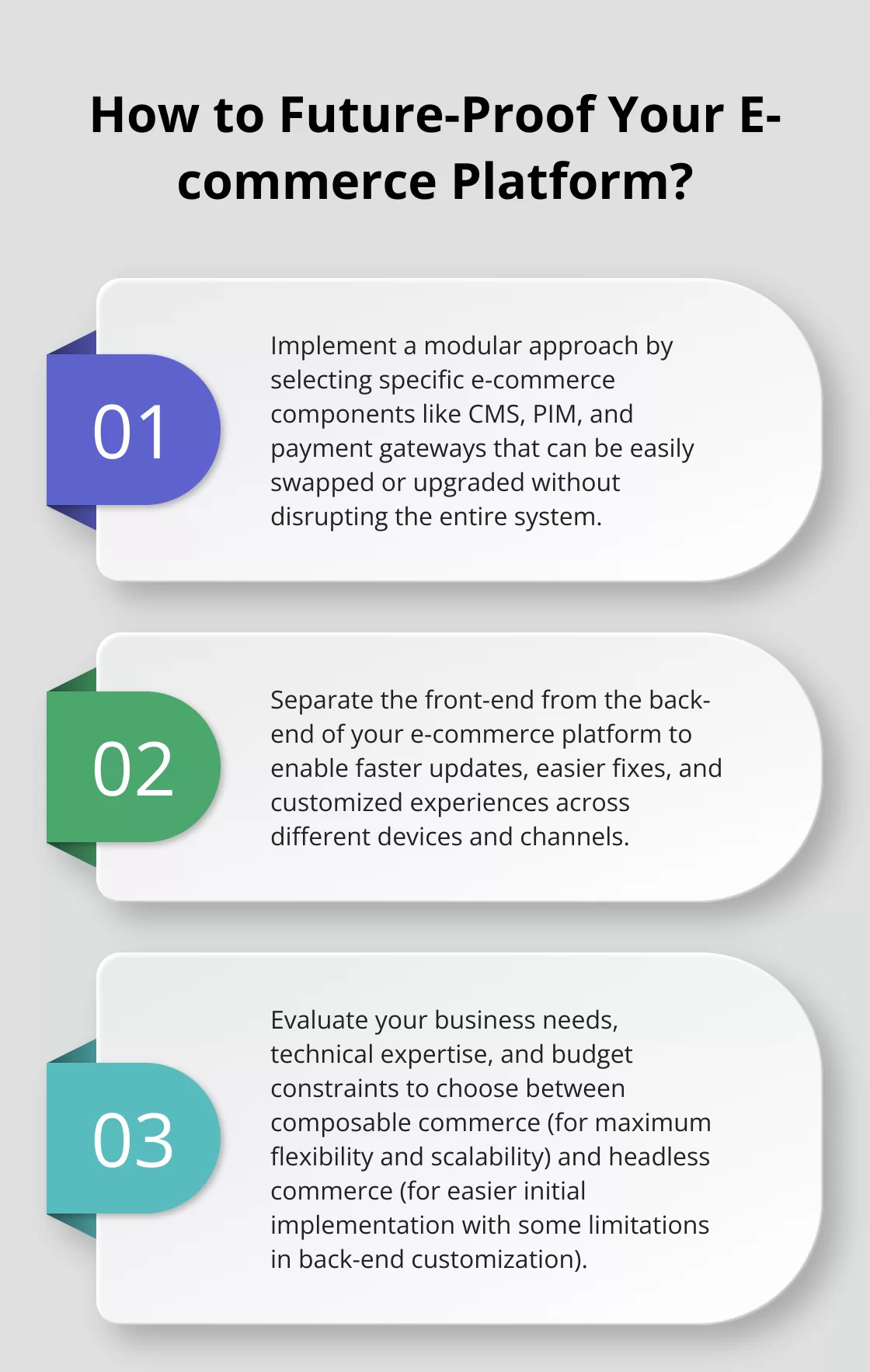
The e-commerce world? It’s not slowing down; it’s getting more dynamic, more personalized. The future? It’s in blending composable flexibility with the streamlined ease of headless setups. The winners here? Those modular, scalable, easily integrable platforms poised to take charge in this digital dance.
SuperCommerce offers cutting-edge solutions tapping into the power of composable architecture. We hand you the keys to craft bespoke, high-performance online stores that pivot as fast as the market shifts. SuperCommerce fuels your digital journey-whether you’re in B2C or B2B.